The complete guide
Album covers as décor: making the most of a lit 'now playing' display
Cover art is one of the best reasons to own records rather than files, and yet most of it stays buried in a stack. A lit display shelf is a small piece of kit built entirely around showing it off. This guide covers how to use a "now playing" display well and where it fits alongside your main storage.
The idea: show one, store the rest
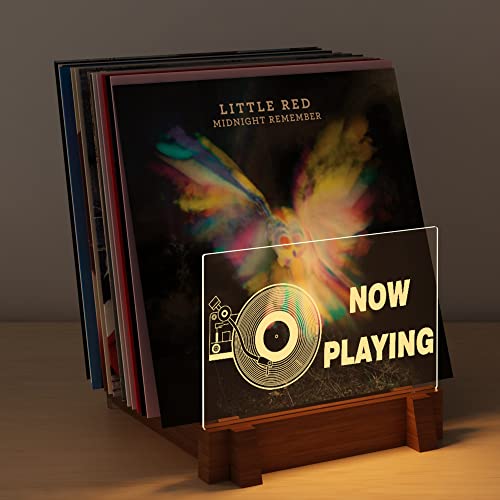
A display shelf isn't trying to hold your whole collection. Its job is to frame a single sleeve — the record on the platter right now — and light it so it reads as artwork. Behind that, a slot holds the next few albums queued up. Used this way it becomes the "front of house" of your setup, updating with every record you play, while a rack or shelf elsewhere does the heavy filing.
Why USB lighting matters
Battery-lit displays are charming until the cells die mid-session. USB power keeps this one practical: plug it into a port or a plug adapter and the warm-white glow is always available, drawing almost nothing. Route the cable neatly so it can't be tugged, and you have permanent, fuss-free lighting rather than something you're forever recharging.
Getting the ambience right
The lighting is warm-white and deliberately soft — it's there to highlight the sleeve, not to floodlight the room. That makes it perfect for evening listening, where a low glow around the current record adds atmosphere. If you want the effect to land, keep the surrounding light dim so the display becomes the brightest, most inviting thing in the corner.
Looking after the acrylic
The clear front is what makes the record appear to float, so keep it clear. Acrylic scratches under paper towel and abrasive cleaners; a soft, damp microfibre cloth is all it needs. Keep the whole piece out of direct sunlight so the acrylic doesn't cloud and the wood keeps its tone, and dust the base with a dry cloth.
The short version
If you love cover art, give the record you're playing a stage. A lit wood-and-acrylic display frames the current sleeve, stores the next few behind it, and turns a listening session into something you can see as well as hear.